- Israeli army to continue operations in area to uncover, destroy tunnels, eliminate threats: Israeli army spokesperson
- Israeli military carried out airstrike targeting weapons shipment in Lebanese-Syrian border area
BEIRUT: The Israeli military has carried out a series of operations targeting what it says are Iran-backed Hezbollah weapons shipments and underground tunnels, stretching from southern Lebanon to the Lebanese-Syrian border.
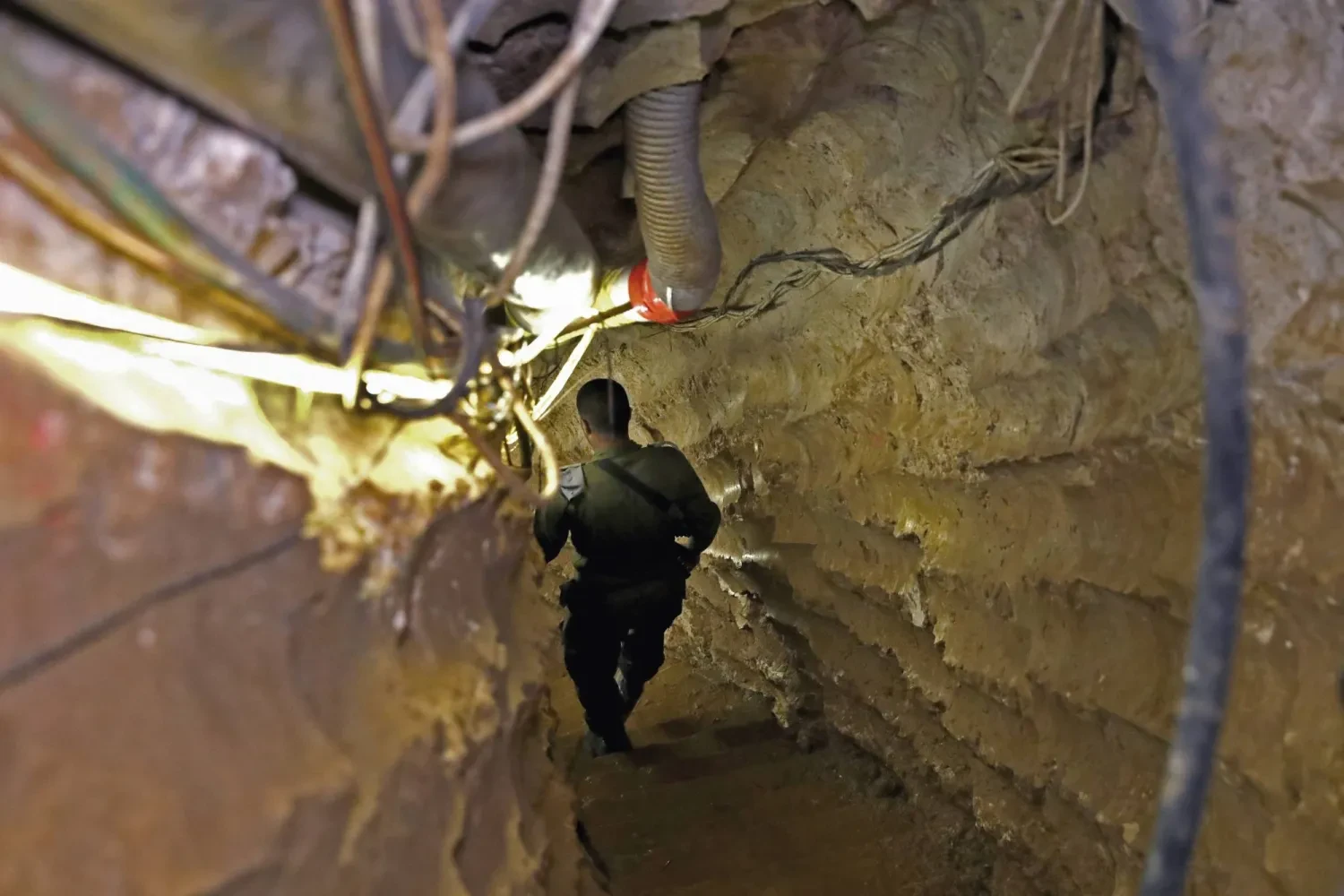
Israeli army spokesperson Ella Waweya said on Monday that forces from the 10th Brigade had destroyed part of an underground tunnel network measuring about 300 meters east of the Yellow Line in southern Lebanon.
Waweya said on X that troops had discovered the tunnel during field operations and destroyed a section of it as part of efforts to locate and dismantle underground military infrastructure.
She said the Israeli army would continue operations in the area to uncover and destroy tunnels, eliminate threats and ensure the safety of its forces while maintaining operational control.
In a separate operation within the Israeli-occupied Yellow Zone of southern Lebanon, Waweya said forces from the 300th Brigade, operating under the 91st Division in coordination with the Yahalom engineering unit, had destroyed a 35-meter tunnel containing two chambers in the town of Majdal Zoun.
Israel has said it will not withdraw from the territory it occupies in southern Lebanon until Hezbollah is disarmed.
Meanwhile, Israeli forces from the 810th Brigade, part of the army’s 210th Division, have detained two Lebanese brothers from the Hamdan family in the town of Shebaa.
An Israeli military spokesperson said the brothers were being interrogated by Israeli security services.
Waweya alleged that the two men belonged to the Resistance Brigades, also known as Saraya Al-Muqawama, a group operating under Hezbollah’s direction and patronage.
She maintained that Israeli military operations were directed against Hezbollah rather than civilians in southern Lebanon.
Separately, the Israeli military carried out an airstrike late on Sunday targeting the Lebanese-Syrian border area, the first such operation in the area in more than three months.
The military claimed it had struck a shipment of weapons being transported from the Syrian Arab Republic to Lebanon for Hezbollah.
Waweya said the Israeli Air Force had targeted the shipment in the Janta area along the border, alleging that the weapons were intended to strengthen Hezbollah’s capabilities to carry out attacks against Israeli civilians and military personnel.
She said the area had previously been used to transport large quantities of weapons.
The spokesperson also accused Hezbollah of exploiting locations across Lebanon to conduct military activities, smuggle weapons and move fighters, describing these actions as violations of existing agreements between Lebanon and Israel.
She reiterated that the Israeli military would not allow Hezbollah to threaten Israeli civilians or troops and would maintain its presence in southern Lebanon while continuing operations aimed at eliminating threats and enforcing the ceasefire agreement.
Hezbollah has yet to respond to the latest Israeli operations.
Meanwhile, Lebanese Parliament Speaker Nabih Berri received a telephone call from his Iranian counterpart, Mohammad Bagher Ghalibaf, amid the continuing escalation.
According to Berri’s office, Ghalibaf said that “calm will not return to the region without an end to the war in Lebanon.”
He added that Iran was placing particular emphasis on Lebanon as it pursued its demands and conditions during ongoing negotiations.
The developments follow remarks last week by Hezbollah’s Secretary-General Naim Qassem, who urged the Lebanese authorities to stop discussing the consolidation of weapons under state control while Israeli attacks and occupation continued.
“There will be no restriction, prohibition, or disarmament of the resistance’s weapons while under occupation,” Qassem said.
He argued that the Lebanese state should instead provide the necessary conditions for the Lebanese army to confront and fight Israel.