
Musk launches Grokipedia to rival ‘left-biased’ Wikipedia

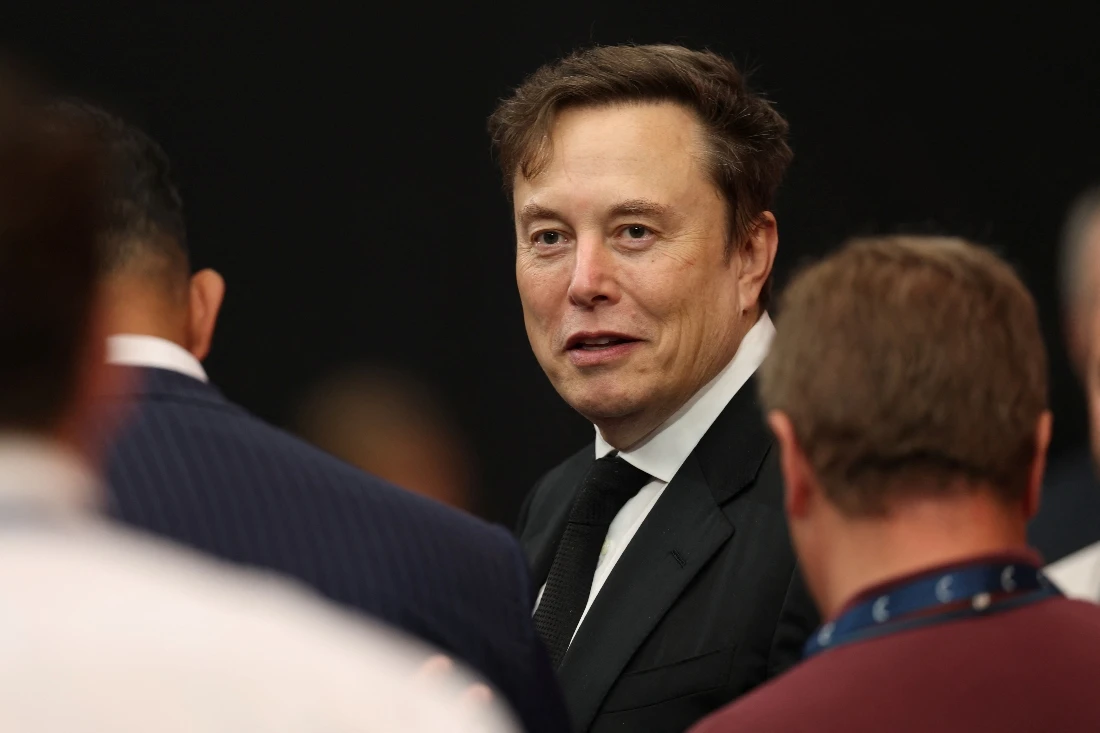
Tesla CEO Elon Musk attends the public memorial service for right-wing activist Charlie Kirk at State Farm Stadium in Glendale, Arizona. (AFP)
Short Url
Updated 28 October 2025
Follow

Musk launches Grokipedia to rival ‘left-biased’ Wikipedia

  • The launch came with the promise of a newer version 1.0, which Musk said would be “10X better” than the current live site, which he claimed is already “better than Wikipedia”
  • Musk has been a regular critic of Wikipedia, in 2024, he accused the site of being “controlled by far-left activists” and called for donations to the platform to cease

NEW YORK: Elon Musk’s company xAI launched Grokipedia on Monday to compete with online encyclopedia Wikipedia, which he has accused of ideological bias.
The site dubbed version 0.1 had more than 885,000 articles by Monday evening, compared to Wikipedia’s more than seven million in English.
The launch came with the promise of a newer version 1.0, which Musk said would be “10X better” than the current live site, which he claimed is already “better than Wikipedia.”
“The goal of Grok and Grokipedia.com is the truth, the whole truth and nothing but the truth. We will never be perfect, but we shall nonetheless strive toward that goal,” he said on X following the launch.
Grokipedia’s release had been marked down for the end of September, but was delayed by the US entrepreneur to “purge out the propaganda,” Musk said in a separate X post.
Musk has been a regular critic of Wikipedia. In 2024, he accused the site of being “controlled by far-left activists” and called for donations to the platform to cease.
In August, he said “Wikipedia cannot be used as a definitive source for Community Notes, as the editorial control there is extremely left-biased.”
The content of Grokipedia is generated by artificial intelligence (AI) and the generative AI assistant Grok.
A Grokipedia article dedicated to Musk states that the Tesla and SpaceX CEO has “influenced broader debates on technological progress, demographic decline, and institutional biases, often via X,” amid what the page says are “criticisms from legacy media outlets that exhibit systemic left-leaning tilts in coverage.”
Created in 2001, Wikipedia is a collaborative encyclopedia managed by volunteers, largely funded by donations, and whose pages can be written or edited by Internet users.
It claims a “neutral point of view” in its content.
AFP has reached out to Wikipedia for comment.
Foreign truckers ‘in God’s hands’ in militant-hit Mali

Updated 3 sec ago
Follow

Foreign truckers ‘in God’s hands’ in militant-hit Mali

KIDIRA: Amath Mboup, a young Senegalese, is haunted by the charred and decomposing bodies of fellow truckers killed by jihadists lying along the highway to the Malian city of Kayes.
Since September, fighters from the Al-Qaeda-linked Group for the Support of Islam and Muslims, known by its Arabic acronym JNIM, have sought to cripple landlocked Mali’s economy and undermine its junta.
They have been blocking and sometimes attacking fuel tankers entering Mali and placing total blockades on certain strategic routes leading to the capital Bamako.
Hundreds of tankers from Abidjan, Ivory Coast’s economic capital, and the Senegalese capital Dakar have been set ablaze.
Dozens of drivers have been killed or kidnapped, particularly on the Kayes-Bamako road in the west of the country, near the border with Senegal.
After waiting two days for routine checks in the Senegalese border town of Kidira, one of the main crossing points between Senegal and Mali, Mboup — who is in his thirties — was preparing to travel onwards to Bamako, his truck loaded with goods.
Alone in the truck, where amulets hang to ward off bad luck, Mboup was apprehensive as he is every time he takes this route.

- ‘Everyone is afraid’ -

“Everyone is afraid to take this road because it’s too risky: You know you’re leaving, but you don’t know if you’ll come back alive,” he told AFP, his face dusty and pale with fatigue.
Malick Bodian, another Senegalese driver, told AFP he is always putting his life “in God’s hands.”
“Your mind is never at peace when you travel this road. You think you could be attacked at any moment,” he said.
Many of the truckers interviewed by AFP said there was no question of quitting their jobs.
“We don’t have a choice. It’s the only job I know how to do to feed my family,” said Mboup, a married father of two.
Behind him, dozens of trucks, engines rumbling, were lined up for several kilometers waiting to leave Senegal for the bumpy Malian roads and all their potential dangers.
Fuel tankers were not among the trucks, however. Last November, JNIM claimed in a propaganda video that all tanker drivers would henceforth be considered “military targets.”
The drivers in line were Senegalese, Malian, Ivorian and Burkinabe and many said they had encountered militants on their journeys.
“They often appear out of nowhere in the forest on motorcycles and are usually wearing turbans and heavily armed,” Malian driver Moussa Traore said.
“When you see them, you’re the one who slows down. Sometimes they stop you to ask for your documents, other times not,” he said.

- Obstacle course -

Mali imports most of its requirements, including fuel, fish, fruit and vegetables, by road from Senegal, Mauritania or Ivory Coast. More than 70 percent of its imports transit through Dakar port.
JNIM is waging a form of “economic jihad” in western Mali, aiming to destabilize the region by “targeting vital logistics routes,” according to a 2025 report by the Timbuktu Institute think tank.
Traveling on certain roads in Mali such as the one to Kayes has become an obstacle course.
“The flow of trucks that used to pass through Kidira is no longer the same,” said Modou Kayere, an official with the West African Truck Drivers Union, which represents some 15 countries.
In late November, Senegalese authorities reported that nearly 2,500 shipping containers filled with goods destined for Mali were blocked at Dakar port due to the security situation.
According to most of the drivers interviewed by AFP, vehicles carrying goods are rarely attacked by militants, unlike fuel tankers.
But the risk is real and the drivers are trying to adapt.
They have decided to stop driving at night and some have even set up alert networks on WhatsApp to warn their peers of danger on the road.