- Pakistan seeks to expand IT exports, attract investment and improve Internet connectivity
- Government weighs national cyber police force, plans to deploy artificial intelligence experts
ISLAMABAD: Chinese technology giant Alibaba is developing a digital platform to bring all Pakistani government services under a single application, Prime Minister Shehbaz Sharif’s office said on Wednesday, as Islamabad moves to digitize public services and overhaul its cybercrime investigation agency.
Pakistan is seeking to leverage its expanding technology sector to modernize public administration, boost exports and create employment opportunities for its young population. The government is also looking to strengthen its capacity to combat cybercrime as digital connectivity and the use of online services expand across the country.
“Alibaba is developing a comprehensive super app for the government of Pakistan, through which all government services will be available on a single digital platform for the convenience of citizens,” the Prime Minister’s Office (PMO) said in a statement following a meeting chaired by Sharif to review information technology and telecommunications projects.
The meeting reviewed progress on the implementation of a strategic transformation framework in collaboration with Alibaba, though the statement did not specify a timeline for the application’s launch.
Pakistan’s IT exports reached $4.6 billion by June 2026, with another $1.24 billion recorded between July and September, according to figures presented at the meeting. Exports by Pakistani freelancers reached $1.165 billion by June.
“The government is taking steps on a priority basis to attract more domestic and foreign investment in IT and IT-enabled services,” Sharif was quoted as saying.
The prime minister constituted a committee to conduct a third-party audit of all operational IT parks under the Special Technology Zones Authority and ordered a review of legislation to prevent potential misuse of provisions governing the establishment of technology companies in these zones.
Officials said work was underway on 32 technology zones across seven clusters nationwide, of which 21 were operational and 11 under construction. The zones had attracted Rs100 billion ($361.7 million) in investment, with another Rs105 billion ($379.8 million) in investment projects under consideration.
Around 300 technology companies have established offices in the zones.
Sharif also directed authorities to improve Internet speeds and connectivity nationwide and accelerate digital skills training for young Pakistanis. Officials reported that telecommunications companies had completed network upgrades in 86 cities as part of preparations for the rollout of 5G services.
CYBERCRIME REFORMS
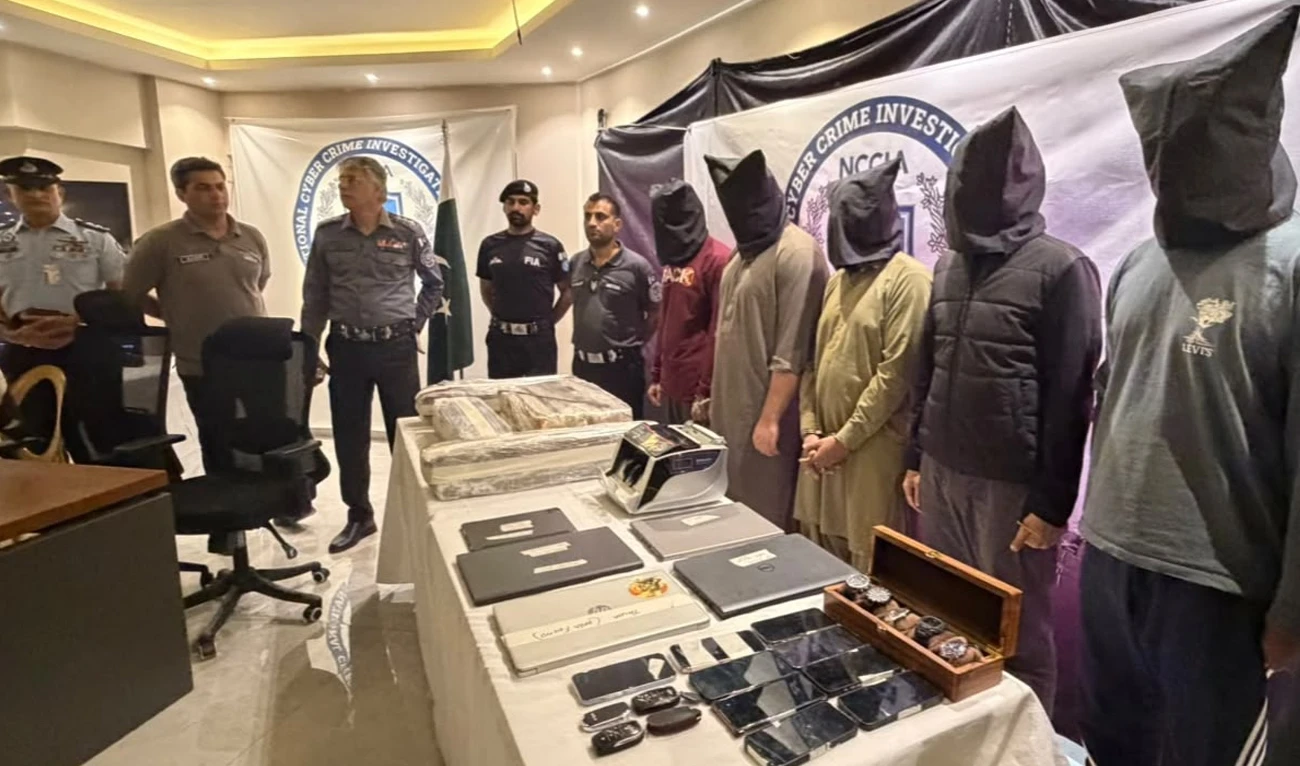
In a separate meeting during the day, Sharif also ordered an accelerated restructuring of the National Cyber Crime Investigation Agency (NCCIA), with officials proposing its transformation into a national-level cyber police force.
“Protecting citizens from cybercrime is among the government’s foremost priorities,” Sharif was quoted as saying in another official statement.
“The system for preventing and investigating cybercrime must be brought in line with modern requirements.”
The prime minister directed authorities to recruit information technology and artificial intelligence specialists for the agency and its subsidiary offices on merit and prioritize the use of advanced technology in its restructuring.
“All resources should be utilized to resolve pending cybercrime cases,” he said.
Sharif also constituted a committee comprising Interior Minister Mohsin Naqvi, Law Minister Azam Nazeer Tarar, Finance Minister Muhammad Aurangzeb and IT Minister Shaza Fatima Khawaja to examine the agency’s proposed reforms and submit recommendations by the end of this week.
Officials told the meeting that a dedicated system for addressing cybercrime-related national security concerns had already become operational.