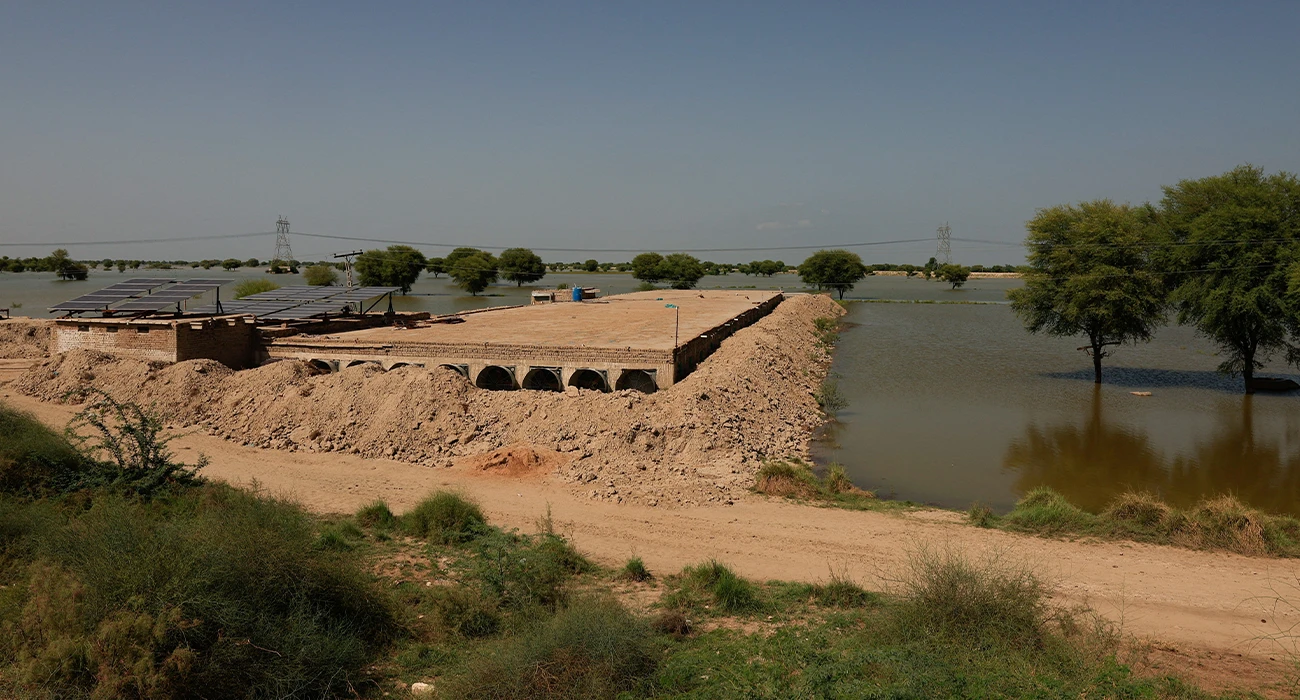
- Project aims to reinforce dikes located along the Larkana region of Sindh province, says state media
- Sindh was one of the worst-affected areas in Pakistan during 2022 floods that killed over 1,700
ISLAMABAD: Japan has approved for Pakistan a grant of 2.58 billion yen ($16.4 million) for a project that will reinforce dikes on the Indus River in Sindh, the state-run Associated Press of Pakistan (APP) reported on Monday.
Pakistan is among the countries most vulnerable to climate change despite contributing less than 1 percent of global greenhouse gas emissions. Floods submerged about a third of the country in 2022, killing more than 1,700 people and causing damage and economic losses estimated at about $30 billion.
The 2025 monsoon also killed more than 1,000 people, displaced around three million and destroyed an estimated 2.2 million hectares of cropland, with Punjab suffering its worst flooding in four decades. Torrential rains since June 26 this year have killed over 180 people and injured more than 510 in Pakistan.
"Japan has extended a grant aid of 2.6 billion Japanese Yen [$16.4 million] to Pakistan for the Project for Flood Protection and Dike Improvement on the Indus River in Sindh province," APP said in a report after the documents of the agreement were signed in Islamabad.
The project aims to reduce the risk of dike breaches and associated economic losses by reinforcing dikes in a targeted section of the Larkana district in Sindh.
The riverbank erosion protection work and dike reinforcement will be carried out using a stronger concrete-based embankment construction method, APP said, stressing that this technique remains relatively uncommon in Pakistan
Takayuki said the project is not just about strengthening dikes but also protecting lives, safeguarding livelihoods and building a more resilient Sindh province for future generations.
Takayuki said the approach was expected to deliver more sustainable and longer-lasting results than conventional repairs.
The lower Indus basin is densely populated and agriculturally central, so embankment failures there threaten homes, livelihoods and infrastructure at once. Sindh was among the provinces worst hit in the 2022 floods, when floodwaters stood over farmlands for months.
Beyond reducing the risk of a breach, the project is expected to limit the area inundated during floods and cut the economic losses that follow.