- Dealers reported prices of Rs420 ($1.52) per kilogram, down from highs of Rs800 ($2.90) after closures at the Iranian border
- Port records show a 20,115-ton cargo was loaded in the UAE. Retail prices remain 43 percent above the regulator’s November ceiling
KARACHI: Cooking gas prices have fallen nearly 48 percent from last month’s highs in parts of Pakistan, dealers said this week, as a bulk shipment from the United Arab Emirates helped ease a shortage triggered by closures at the Iranian border.
A Karachi dealer quoted Rs420 ($1.52) per kilogram for liquefied petroleum gas, or LPG, on Thursday. Prices had reached as high as Rs800 ($2.90) in parts of the country after Pakistan and Iran closed the Gabd-Rimdan and Taftan crossings on Oct. 17. Even at Rs420, the fuel was about 43 percent above the Oil and Gas Regulatory Authority’s November consumer price ceiling of Rs294.08 ($1.06) per kilogram.
LPG is used for cooking and heating, especially in areas without piped gas. Pakistan imports more than half the LPG it consumes. The disruption to overland supplies from Iran added to the strain of the US–Iran war, which has disrupted shipping through the Strait of Hormuz and pushed up regional energy costs. Pakistan cited security and anti-smuggling concerns for the border closures, while Iran cited technical reasons. Some overland deliveries later resumed.
“The prices have decreased by about Rs100 ($0.36) per kilogram in the last three-four days due to better supplies,” Khubaib Sabir, a Karachi dealer, told Arab News Thursday.
“Today’s rate is Rs420 ($1.52) per kilogram, which is Rs30 ($0.11) down from yesterday’s Rs450 ($1.63),” he said.
Petroleum ministry spokesperson Zafar Abbas did not respond to questions seeking comment.
CARGOES FROM UAE AND OMAN
The price surge prompted Islamabad to direct four state companies to buy LPG in bulk under revised rules that allow them to recover their import costs. The petroleum ministry announced a 15,000-ton shipment last week, the first major purchase under the new rules, without naming its supplier or country of origin.
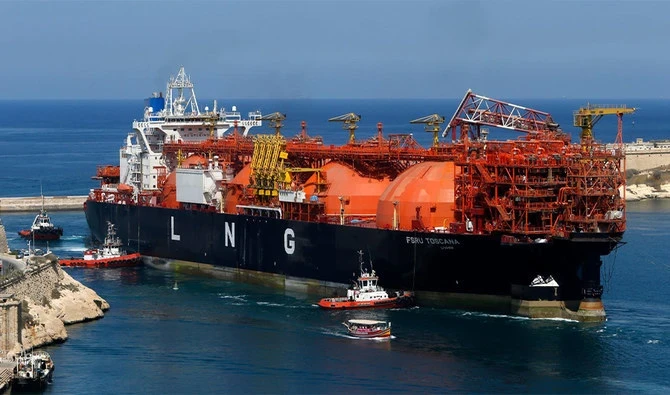
Port Qasim Authority shipping records reviewed by Arab News show that the Pacific Star 1 arrived at the Engro Vopak terminal near Karachi on Nov. 17 with 20,115 tons of LPG loaded in the UAE. People familiar with the cargo said 15,000 tons belonged to state-owned SSGC LPG Ltd. and the remaining 5,115 tons to a private importer.
Shipping records also show private importers bringing in smaller cargoes from Oman.
On Sunday, Pakistan State Oil and Oman’s OQ Trading signed a purchase agreement for petroleum products. The Dawn newspaper reported that Pakistan’s Petroleum Division expected LPG supplies from OQ Trading to exceed 120,000 tons by year-end.
“Our country structure, our market structure, our political structure, our business structure, it is best suited for the Middle East,” a senior Petroleum Division official told Arab News, speaking on condition of anonymity because he was not authorized to speak publicly.
“Whether it is Iran, Basra, Oman. These are the areas that suit us (for LPG imports),” the official said.
He declined to confirm the origin of SSGC LPG’s shipment.
“Who says LPG supplies have stopped through the (Iran) border,” the official said, confirming that LPG was still entering Pakistan by land. “Trading with Iran officially, there are big challenges in it,” he added, citing US sanctions.
FROM PORTS TO CONSUMERS
The official dismissed reports of a shortage of trucks to move LPG from terminals. Ammar Shah, chief executive of Engro Vopak Terminal Ltd., said his terminal was dispatching between 1,000 and 2,000 tons a day.
“EVTL has received 42,000 tons (LPG) due to government introduced reforms” last month, Shah told Arab News.
He said “nothing is stuck” at Engro Vopak or the SSGC LPG terminal.
“EVTL and the importers are working very closely ensuring healthy product movement and that there is sustained availability for end consumers,” he added.
The Petroleum Division official said a cold spell could push demand up by as much as 20 percent.
“Our assessment for now is that the LPG market will remain stable and the demand will remain normal until we see a significant change in winter seasonality pattern,” he said.