- Traders protest highway attacks, Afghan border closure and complain about rising utility bills
- Field Marshal Munir reviews security operations, pledges support for Balochistan’s development
QUETTA: Traders across Pakistan’s southwestern Balochistan province shut markets on Thursday to protest deteriorating security on highways, suspended trade with neighboring Afghanistan and rising utility bills, as the country’s military said the army chief visited the region to review security operations and development projects.
The shutter-down strike, called by political parties and supported by traders, brought commercial activity to a halt in major cities, including the provincial capital Quetta. Pharmacies and grocery stores selling essential food items remained open.
Abdul Rahim Kakar, president of the Balochistan traders’ association, said worsening insecurity on provincial highways had disrupted the movement of goods and passengers, dealing a blow to businesses already struggling with restrictions on cross-border trade.
“Goods transport and passenger buses are being attacked on provincial highways,” Kakar told Arab News.
He said armed men stopped vehicles and demanded money from traders.
“Armed men standing on provincial highways force traders to pay extortion for the release of their vehicles,” he added.
Kakar said the suspension of trade with Afghanistan had further compounded the difficulties facing businesses in the province.
“Majority traders in Balochistan are dependent on trade with Afghanistan, but the Pak-Afghan trade has been suspended since last one year,” he said.
He also accused the federal government of burdening businesses with excessive electricity and gas bills at a time when economic activity in the province had slowed.
SECURITY CHALLENGES
The traders’ protest highlights the economic impact of persistent insecurity in Balochistan, where militant attacks have disrupted commercial activities even as Islamabad seeks to attract foreign investment in the province’s mineral resources and infrastructure.
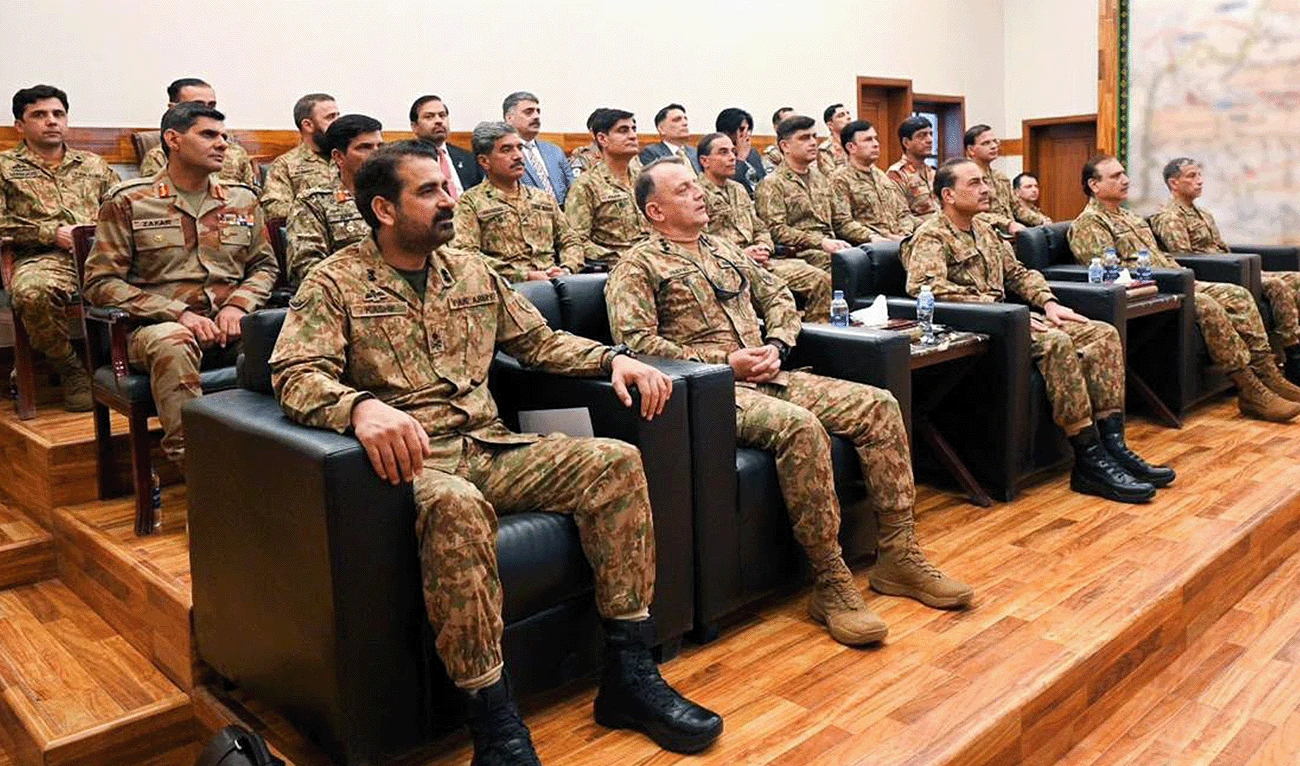
The concerns coincided with a visit by Pakistan’s Chief of Army Staff (COAS) and Chief of Defense Forces (CDF), Field Marshal Asim Munir, to Turbat in Balochistan, where he reviewed security operations and development initiatives, the military said on Thursday.
“The COAS & CDF was given a comprehensive briefing on the prevailing security environment, operational preparedness and successful on-going operations against externally sponsored terrorism,” the military’s media wing, Inter-Services Public Relations (ISPR), said in a statement.
“He was also apprised of the progress of various ongoing socio-economic development initiatives for people of Balochistan.”
Balochistan, Pakistan’s largest province by area, is rich in copper, gold and natural gas but remains among the country’s least developed regions. Ethnic Baloch separatist groups have waged a decades-long insurgency, demanding independence or greater control over the province’s natural resources.
The militants have repeatedly targeted security forces, government installations, transport routes and Chinese-linked projects. Islamabad accuses India of supporting the insurgency, a charge New Delhi denies.
During his visit, Munir met troops involved in security operations and reiterated the military’s commitment to supporting peace and development in the province.
“Field Marshal Syed Asim Munir reaffirmed Pakistan Army’s unwavering commitment to stand shoulder to shoulder with the people of Balochistan in their continued pursuit of peace, prosperity and sustainable development,” the ISPR said.
The security challenges have also complicated Pakistan’s efforts to attract foreign investment. Earlier this month, a Saudi business delegation led by Prince Mansour bin Mohammad Al Saud, chairman of the Saudi-Pakistan Joint Business Council, discussed potential investments in mining, energy and livestock with provincial officials.
Balochistan is already home to the Chinese-backed Saindak copper-gold project and the multibillion-dollar Reko Diq copper-gold project being developed by Canada’s Barrick Mining Corporation.
Islamabad maintains that improving security and expanding economic opportunities are essential to addressing the province’s longstanding grievances.